Purpose is not something you find. It is something you define.
Living with purpose is a defined life of meaningful contribution that a person uniquely calls on themselves to live.
Your gifts and talents, joined to a cause or something you believe in that lies beyond yourself, are the drivers of that contribution. One supplies the means, the other supplies the reason.
Living with purpose has measurable effects. It builds meaning into your life, it lowers your anxiety, and it produces the high-quality connections that let you belong.
The three problems a defined purpose solves
Purpose is not only a source of meaning. It is a practical tool you can use to solve real situations. Here are the three most common.
Why success can feel hollow, and the structural fix
“I’ve achieved things, so why does it feel hollow?”
Success feels hollow when the achievement was never connected to what is actually meaningful to you, and the structural fix is to define your purpose before you set the goal.
The promotion landed. The targets were hit. And underneath sits a hollowness you do not say out loud, because complaining about success is not attractive. So you reach for the usual remedy, a bigger goal, and the cycle of achieving and feeling hollow spirals. More achievement, the same emptiness.
It builds a strange kind of hopeless success, where the future you are winning starts to look like an unwanted life. This is what successful people mean when they say they feel empty.
This dissatisfying success only needs one simple structural change.
You have vision. You set goals. That is good. But goals empty of real purpose are ambition with no spirit at the center. Without purpose you do something impressive, enjoy the rush and the Friday night drink, but sit at home empty, because the achievement was never meaningfully connected to who you are.
This lacks personal authenticity.
What if you were to define and live your purpose first? Set goals and build a vision second? If we remind ourselves that to define a purpose, you also name your gifts, and the strengths that are natively yours. You then identify something you believe in that matters beyond yourself. Finally, you commit those gifts to serving that belief.
Achievement built on the foundation of a purpose-driven life means you have given meaningfully to have that success. This pays you back with intrinsic satisfaction, it leads to high trust from the people you dealt with, and what you achieved has been an expression of you rather than a socially expected version of you.
How to stop being busy and going nowhere
“I’m busy every day and going nowhere in particular.”
A full calendar and an empty compass. Daily stress, no weekly progress. The modern world makes it easy to get anxiously busy and yet feel that what you are doing is futile, a groundhog day. Where is my journey? What is my end point?
An algorithm hands you a curated feed of everyone else’s highlight reel, so you compare instead of aim, chasing waypoints that were never yours and burning your always-busy time to do it.
You drift because nothing of real worth is commissioning your days, which is why you can feel busy but lost, lacking any real direction.
A written Purpose Statement becomes that commissioning authority. Purpose, when activated, becomes the filter for every opportunity, project, and demand.
Does this serve my purpose? Does it use my gifts to give what only I can give?
The Hierarchy of Purpose extends that filter across your whole life. You have one life purpose, and it expresses itself differently at work, in your family, and in your community. You will still be busy, but one purpose serving every room merges a fragmented life into a single whole.
Home and work still need to be balanced, but neither is more important than the other once you are living purposefully inside each of them.
How a clear purpose lowers anxiety and ends loneliness
“My anxiety won’t settle, and I feel alone in a crowded life.”

More connected than any generation in history, and lonelier, with a low hum of background anxiety that feeds the self-doubt and disconnection underneath it.
You have tried managing the anxiety directly. Apps, routines, self-care lists. They ease the symptom but rarely heal the cause.
Worldly pressure points your attention inward. You focus on the doubt and the disconnection, and the focus keeps you imprisoned in them. This is also why managing anxiety on its own so often fails, and why so many people feel lonely even when they are surrounded by others. The working mechanism out is self-forgetfulness. You shift your attention outward.
When you live with purpose, your attention turns toward the opportunities to contribute, and attention spent on contribution is no longer available for self-doubt.
The anxious question, how am I doing, gets physically displaced by the purposeful one, what does this person need?
Contribution also cures loneliness at the cause, because it makes you visible, relevant, and needed by and belonging in a community.
The long-range blue zone research points out that people with a clear sense of purpose live measurably longer, at every age it has been studied. People of all ages have a clear and important purpose in those communities. They belong.
What changes when you define and live with purpose
The change shows up in small ways first. Monday stops feeling like an ambush, because your days have purpose as a commissioning authority and Mondays have more meaning. Saying no gets easier, because purpose filters what you do, but also clarifies what you will not do.
The comparison scroll loses its grip, because you have a direction that makes other people’s waypoints either irrelevant, or informational.
The anxiety quiets as your attention finds outward work to do, and somewhere along the way you notice you feel needed, and visible to a community that would miss your contribution if it stopped.
Over time people ask you how you stay so steady, and you realize the answer is not a technique. Your life has a center now, and everything in it carries meaning.
Inside the Purpose Work
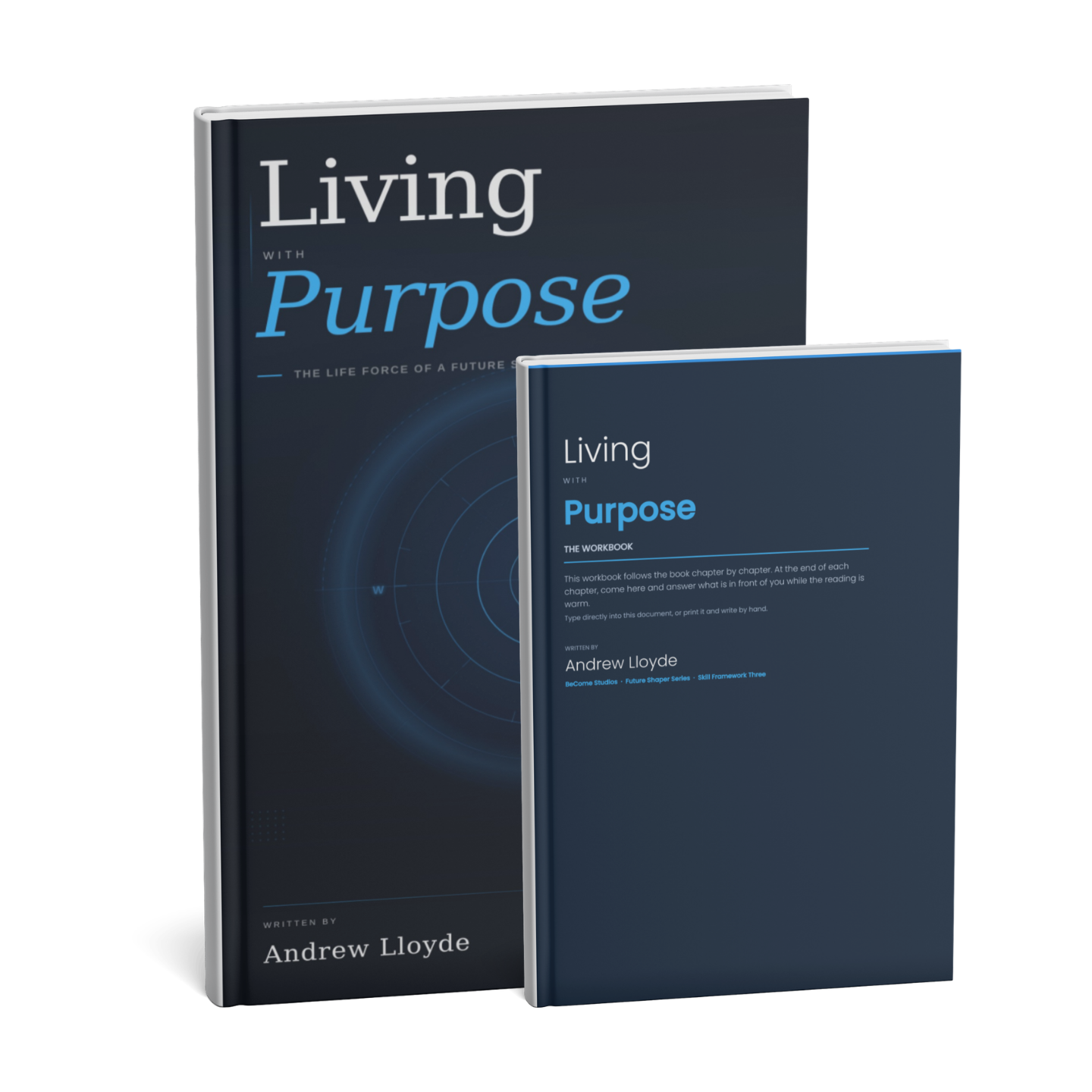
The full method: the three moves of gifts, a cause you care about, and a commitment to contribute through them; the purpose preparation work; the statement structure; building your written Purpose Statement; the integration with Personal Presence; and the Hierarchy of Purpose appendix, which solves the work-versus-family question most purpose books ignore. Andrew’s book Living with Purpose takes you on that deep dive and brings you back to the surface with your Purpose Statement defined, ready to make purpose the spine of your life.
Who is behind it
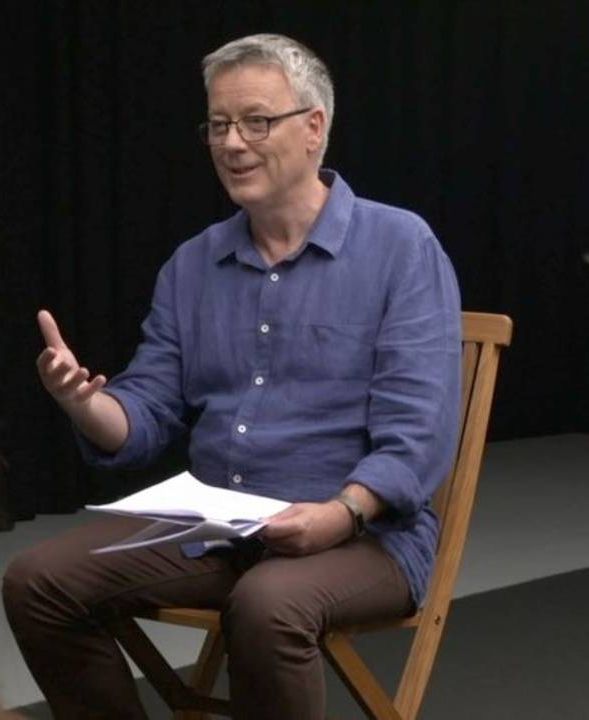
Andrew Lloyd is a NIDA graduate who spent more than thirty years training professional actors, and then workplace professionals, people whose livelihood depends on commanding a room under pressure and being able to connect and influence. He now teaches that same craft, adapted for everyday professional life, through BeCome Studios. This page is part of the Integrated Performance Practice: seven Skill Frameworks built to work on each other.
Common Questions
What does living with purpose actually mean?
A defined life of meaningful contribution that you uniquely call on yourself to live, built from your gifts, used to serve a cause, or something you believe in, which lies beyond yourself, and a standing commitment to contribute to the planet and the lives of others.
Should I work out my purpose or my vision first?
Purpose, always. A vision is important, but built before purpose it becomes ambition and direction without meaning. You risk the recipe of living an impressive life filled with hollow achievement. Purpose is the engine. Vision is the destination that gives your purpose direction.
Can purpose really reduce anxiety?
Yes, through a specific mechanism: self-forgetfulness. Attention engaged in contribution means there is no attention on self-doubt. It is displacement, not suppression, which is why the process of living with purpose works, it encourages self-forgetfulness.
Do I need to change careers to live with purpose?
Usually not. The Hierarchy of Purpose shows how one life purpose can express itself through the work you already do, so most people find their current job can carry it. But the framework is honest both ways. If you test your work against your purpose and find they genuinely cannot connect, it tells you that plainly rather than forcing a false fit, and knowing that is worth more than a comfortable answer.
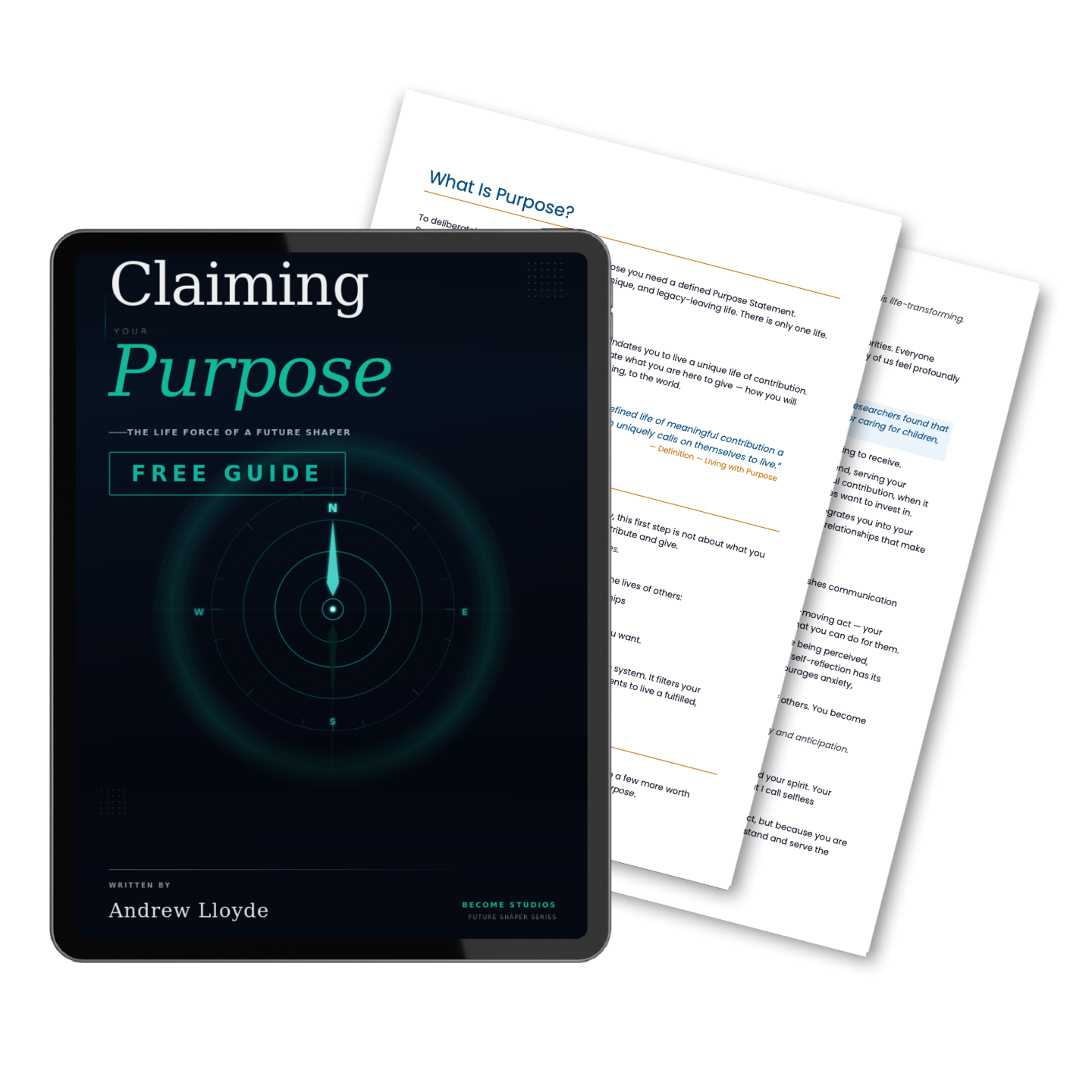
Two ways to begin, depending on how deep you want to go right now. The free Purpose Primer is the fastest first step, a short guide that starts you naming your gifts and your cause. The book and program take you all the way to a finished Purpose Statement and the practice that keeps it alive.

|

|

|