Personal Presence
Diminishes Anxiety, and
Amplifies Authority
Building Presence is a Learned Skill
Personal Presence is a psycho-physical state, the amplification of your body, voice, and sense-attention. Amplifying these communication tools diminishes anxiety and builds confidence, preparing you to connect with, engage, and influence your audience.
Some people have presence naturally. Most do not, but you can learn to build it, using the same skills my actors needed to walk on stage with an aura they needed to compel their audiences to connect and engage with them.
I am a NIDA graduate and have trained professional actors in this methodology for over thirty years. Like you, their careers depend on owning a room. The method is now one of seven Skill Frameworks in the Integrated Performance Practice, the system behind the BeCome Studios books and programs.
Three Problems Building Presence Solves
There are many reasons to build Personal Presence, and I am only touching the surface when I say it helps you diminish fear and anxiety, build confidence and trust, and engage and influence. It equips you with real power, gravitas, and authority.
Personal Presence has profound benefits. It begins by helping you belong, be recognized, and feel relevant, and it is a foundation for leadership and executive presence.
Here are three common, recognizable communication problems that building Personal Presence solves. Each one is a step toward communicating and leading with influence.
Problem 1.“I shrink under pressure.”
You are a subject-matter expert. But in that vital conversation or meeting, something tightens: the breath climbs into the chest, the voice thins, the hands shake, the gestures stiffen. Dread makes you tentative. You feel yourself failing, and you begin to shrink instead of stepping up.
You have probably tried the standard advice: calming breaths, more rehearsal, picturing the audience in their underwear. These are hard to apply in the moment, and each only helps briefly.
To stop fighting your symptoms, you need foundational change.
The aim is to walk into the difficult conversation or the big presentation and not have to manage yourself at all. No shrinking from the moment, no wrestling your anxiety while trying to think. Building Personal Presence gives you a settled, habitual state, bedded in, so the need to manage yourself mid-conversation falls away.
Retrain Your Body and Breathing to Avoid Anxiety
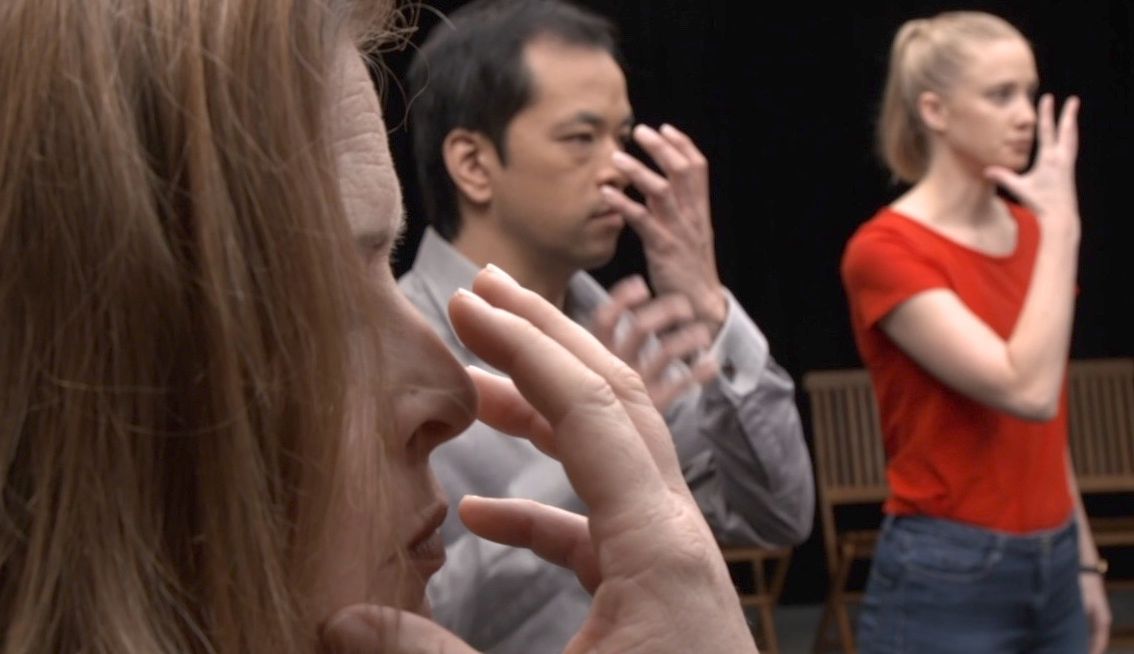
Breathlessness, shaking, and a tight or thin voice are your nervous system reading a safe but high-stakes conversation as a threat.
The methods we use to build Personal Presence begin with the Ready State: resetting the breathing and the body through relaxation, voice-centering, and anxiety-reduction techniques. They prepare your physiology to cope, and then to thrive, under pressure.
From there you establish the Neutral Body, an open stance that releases your communication energy, now freed from the grip of tension. The Ready State process places you in a relaxed, centered, energized, and confident stance. You feel a physical strength that, in turn, becomes genuine confidence.
Ready State Builds Self-Belief
Ready State diminishes the tension and anxiety that hold back the voice, body, and the senses. Trapped by tension and a lack of vocal, physical, and sensory technique, you cannot communicate effectively.
Ready State prepares you to release your Personal Presence by switching off fear and switching on vocal and physical power. You are now equipped to resist the need to shrink, isolate, or spiral downward when communicating. You have self-belief to stand on.
Problem 2. “I feel like a fraud, and faking confidence makes it worse.”
Roughly two-thirds of knowledge workers privately report symptoms of imposter syndrome. About 62%, according to Asana’s global Anatomy of Work survey of more than 10,000 workers. So if this is you, you are not alone. And the era’s prescribed cures, the power-pose and fake it till you make it, can, used badly, deepen the feeling, because you are communicating from behind a mask.
Inauthentic confidence cracks under real pressure, and people see through it. The body never lies; false power shows. Each time an audience senses the gap between who you are trying to be and who you actually are, they trust you a little less. You feel that response, and your inner critic is handed fresh evidence.
The critic’s verdict feels confirmed: “See? You are a fake.” Run that loop long enough and the occasional imposter feeling hardens into genuine imposter syndrome. Trying to perform better means more effort, driven by the sense that you should be more, and that obligation builds pressure, then anxiety, then fear.
When You Are You, at Your Best, There Is Nothing to Perform
Imposter feelings live in the body: the high breath, the braced shoulders, the guarded voice. You cannot argue these symptoms away, but you can change what your body is doing.
Personal Presence teaches a series of skill-based habits: settled breath, open stance, a voice in its full resonance. They strip you back to who you are: your real voice, your real body. The work runs inward, building confidence and dissolving imposter feelings. Presence is not a mask thrown over self-doubt. It uncovers and amplifies the true you.
Once it is established, your attention stops circling your own problems. Instead you focus, with intention, on the people in front of you. Your inner critic can finally rest. Personal Presence becomes a tool that develops real self-belief: the confidence, capability, and radiance to carry your purpose, vision, and character into every conversation. People trust, respect, and respond to what you say. Recognition and influence follow.
Download the Free GuideProblem 3. “I’m capable, but I keep getting overlooked.”
Scenario One
You make the point, and the room moves on. Ten minutes later someone louder makes the same point, and people stop and listen. Your performance review says “needs more executive presence” with no instructions attached, and you lack the confidence to ask what it means.
Scenario Two
You watch less qualified people get heard, promoted, and remembered. When you ask what you need to do, you are told to “speak up more,” as if volume were the issue. It is not.
Research on executive presence by Sylvia Ann Hewlett and the Center for Talent Innovation found that gravitas, the grounded composed authority a person carries in body and voice, accounts for about two-thirds of executive presence, the largest of its three components by a wide margin. And first-impression research in social psychology shows a room reads warmth and steadiness from your body within moments, long before your competence gets a hearing.
In other words, the room grants authority to the instrument before it grants authority to the expertise. Personal Presence is the gateway to people believing in your expertise at all.
Presence prepares the resonant voice that carries conviction without strain; eyes that take the room in instead of guarding against it; stillness that reads as composure rather than absence; and the authority that compels people to listen when you speak. Your competence finally gets the carriage it deserves, built from the inside out. When the body communicates with integrity, the mind and emotions follow, and people read that integrity as something to trust.
The Shift: What Might Change?
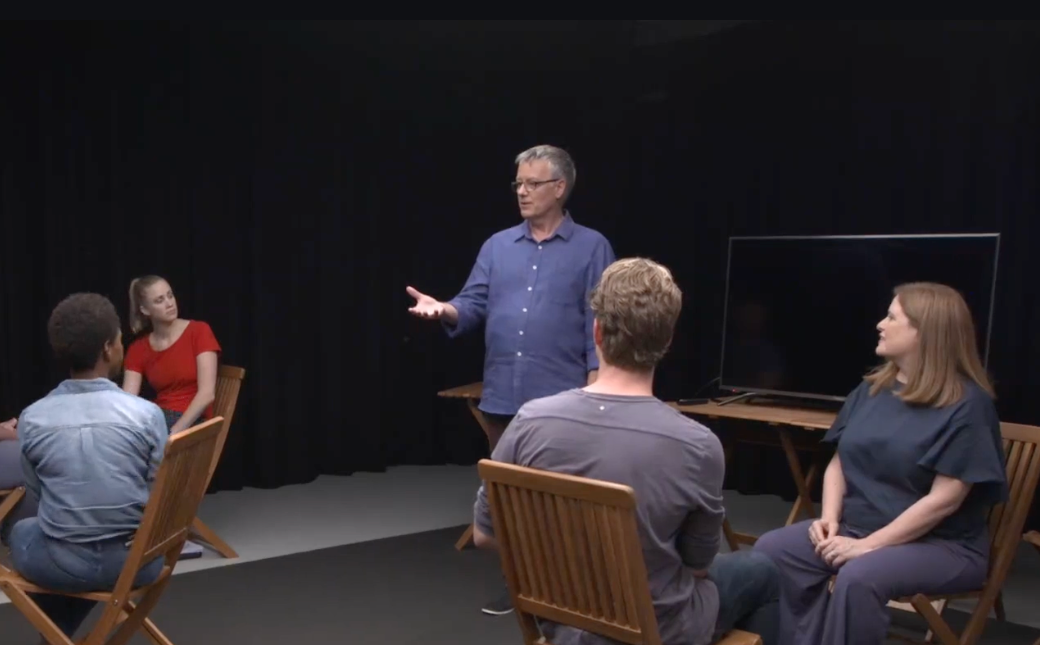
Picture talking in a management meeting: your breathing is relaxed, your voice and body are energized and assured. As you speak, the room registers your controlled, resonant voice and listens, without interruption.
No pre-meeting dread sitting in your throat. Instead, an energized anticipation in your belly. Communicating under pressure no longer overwhelms you.
The opportunities you used to turn down, the pitch, the panel, the promotion conversation, you now look forward to.
People see you as calm, grounded, authoritative, interesting, and likeable, because you have built habit-driven skills that released your vocal, physical, and sensory presence, letting you attract, connect with, and engage the people you communicate with.
Inside the work
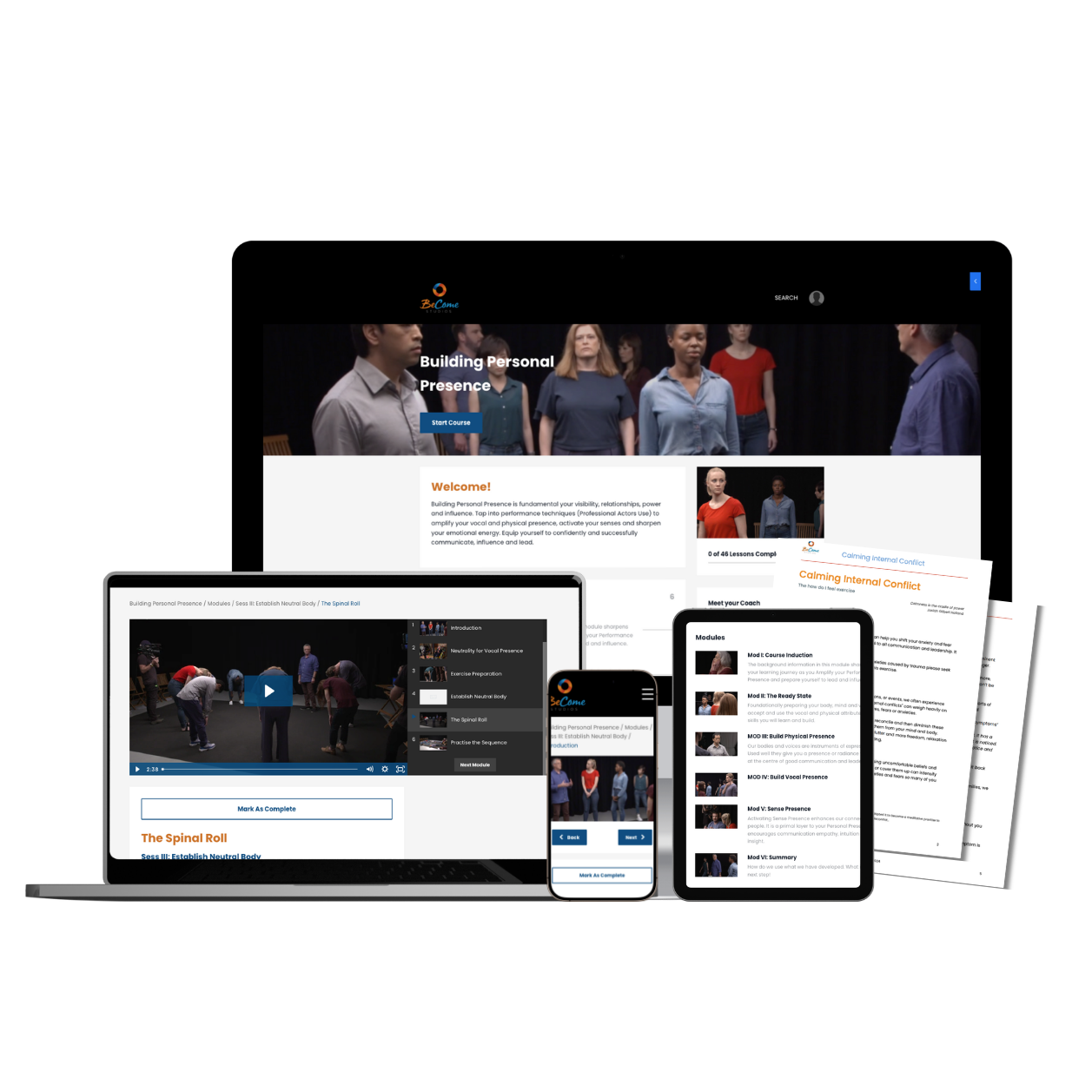
A step-by-step psycho-physical method with exercises at every stage: the Ready State, the Neutral Body, tension release, fear management, the resonant voice, the awakened senses, and the alive, confident body, each learned until you can switch your presence on at will.
Who's Behind It
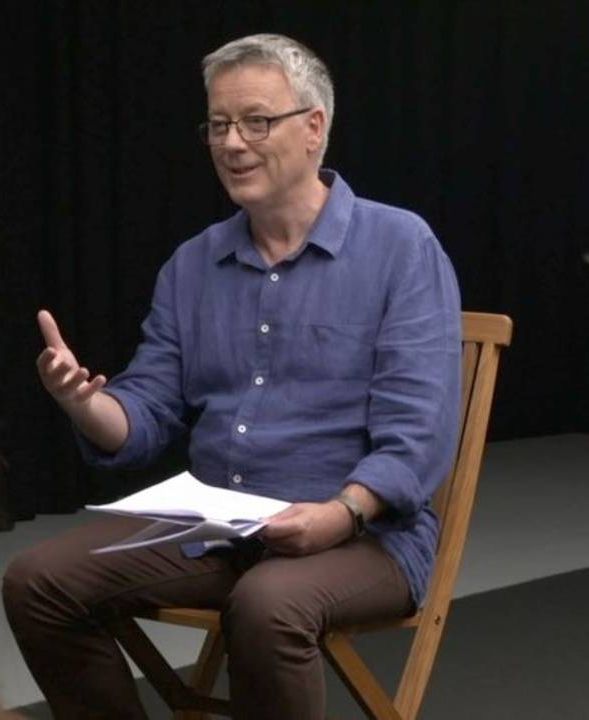
Andrew Lloyde is a NIDA graduate who spent more than thirty years training professional actors, whose livelihood depends on capturing and holding a room under pressure. He has adapted that craft for everyday professional life through BeCome Studios.
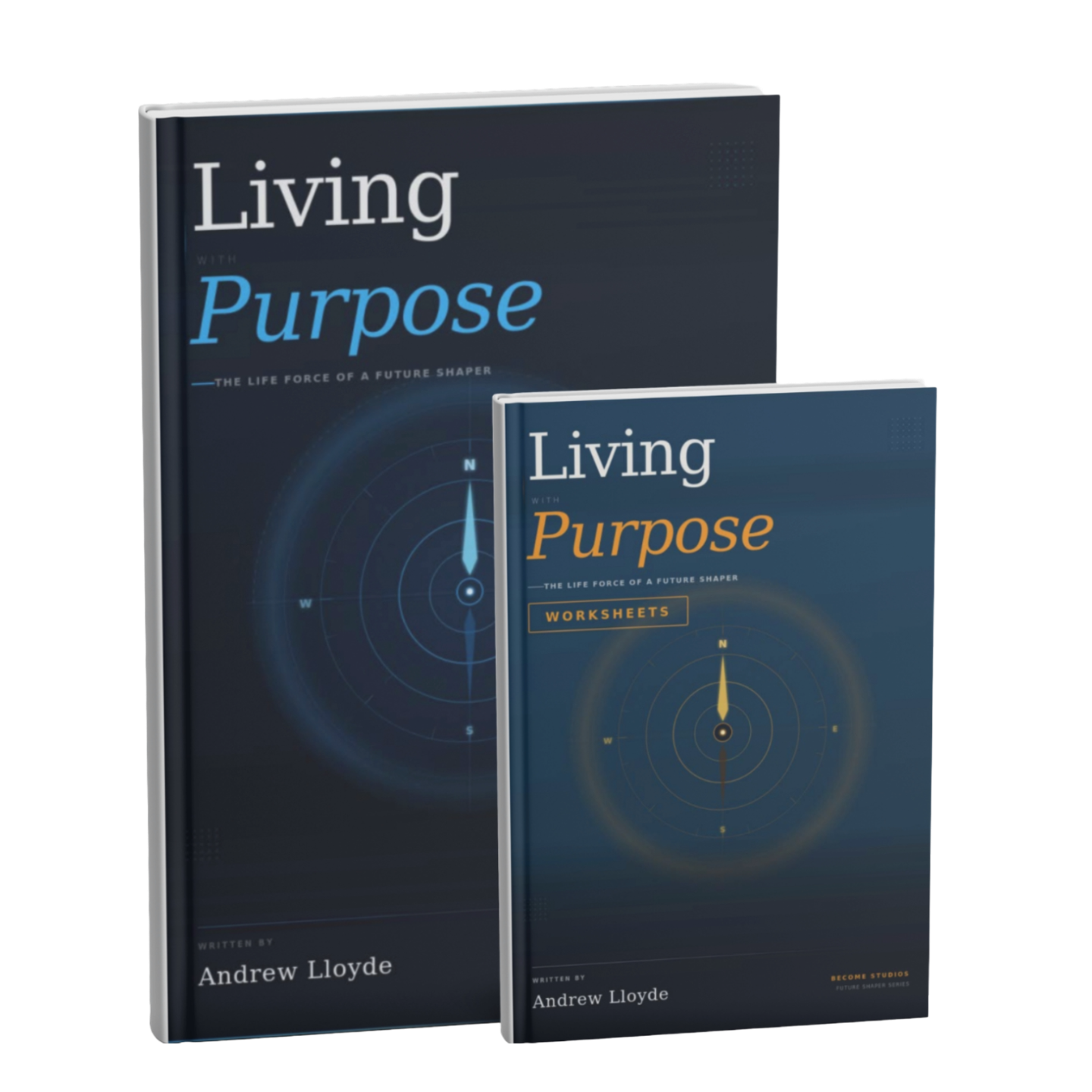
This page introduces Personal Presence, one of seven Skill Frameworks that work together to form the Integrated Performance Practice. Andrew shares them across a series of books and courses.
Common Questions
Is presence something you’re born with?
Presence is a trainable psycho-physical state, not a fixed trait. Some people have a natural presence, but most learn to activate it, the same state actors switch on nightly to capture an audience and perform with vocal and physical power.
How is this different from most performance coaching?
Most confidence work targets your thinking; Building Personal Presence targets the body first, because the symptoms live there. When the body settles, the mind shifts with it. You cannot squash anxiety, but physical adjustments change its nature, moving it toward anticipation.
By centering your breathing, releasing your body, and giving your voice power and resonance, you build mental and psychological confidence and more resilient behavior. Actors understand this link between body and feeling, to play a more arrogant character, they might lift the chest and the chin. We use the same mechanism for a better end, to amplify your own energy and experience real strength, practiced until the body owns it and it becomes part of how you live, communicate, and influence.
Will it help with imposter syndrome?
Yes. Body-based presence work reduces imposter syndrome durably, because it builds physical habits you can rely on under pressure. That is the point: address the feeling once, then manage it for a lifetime.
Imposter feelings are, for most people, felt physically. Settling and activating the body changes the state in a way affirmations cannot. When you feel yourself backsliding, you correct immediately by falling back on these physical habits, a safety net you can trust for the long term.
Do I need any performance experience?
None. You are not learning to act. You are learning the underlying craft actors use to build presence, applied to being more fully yourself, usable in any situation: the workplace, a hard conversation with a friend, a first date, chairing a community meeting.
Three Pathways for More Information
For those curious, keen, or driven to learn more, here are three pathways, each offering progressive depth. If you are not sure, start with the Free Guide and we will send it to you.
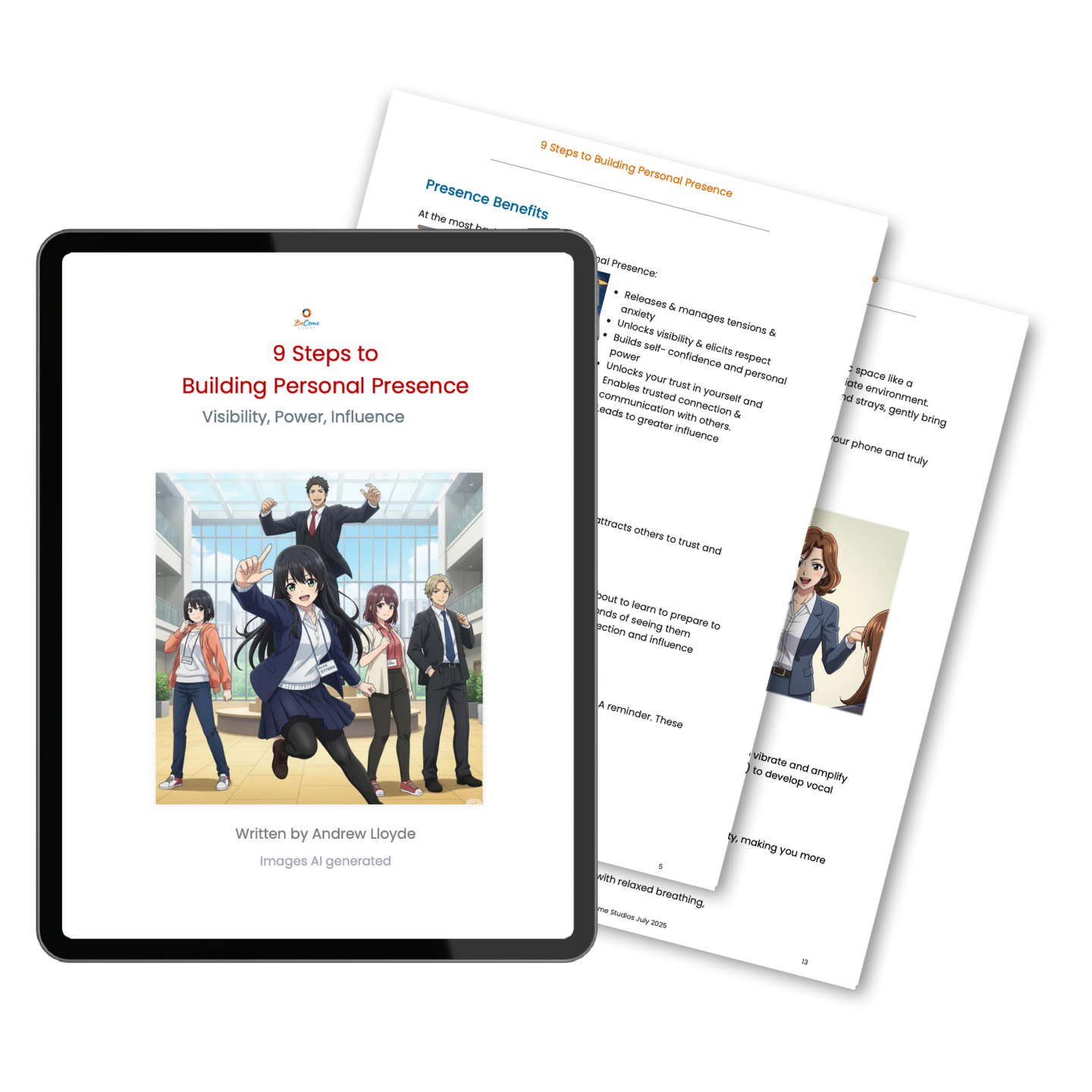
Dip a Toe: Start Free
Get the free guide for this framework by email, the fastest first step.

|

|

|